

Bangladesh’s anthrax vaccination programme is aimed at cattle. This year’s outbreaks have come largely from goats. That mismatch explains much of why the disease keeps returning.
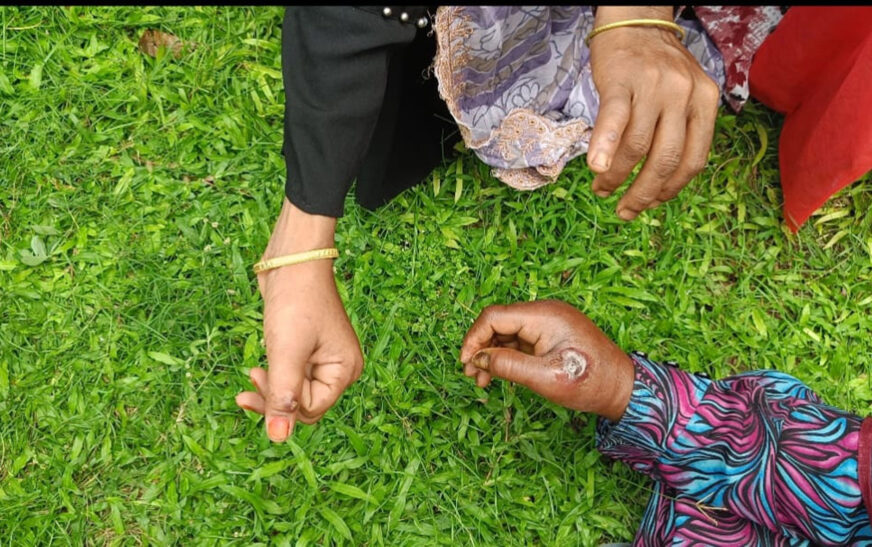
The case data is unambiguous. Of 412 patients recorded in Meherpur, 262 contracted anthrax after consuming meat from sick goats. Across the northern districts, at least 465 people have been treated for symptoms, with cases in Gaibandha, Rangpur, Dinajpur and Meherpur, concentrated in Meherpur’s Gangni upazila. In October 2025 a woman in Gaibandha died after processing infected goat meat.
The reason goats are excluded is practical rather than deliberate. At standard dosage, goats show adverse reactions, becoming restless and drooling after injection. Farmers watch this happen and decline to repeat it, which is a rational response to what they have observed.
There is a known answer. Several countries administer a half dose of 0.5 ml to goats rather than the full 1.0 ml used for cattle, which reduces the reaction while retaining protection. Adopting a species-specific dosing schedule is a technical adjustment, not a research programme.
The stakes extend past public health. Livestock contributed 3.19 percent GDP growth in 2025-26, and around half the population depends on the sector in some form. Meat production has risen fivefold in a decade and milk production fivefold over fifteen years. An uncontrolled zoonotic disease in that sector is an economic exposure as much as a medical one.
Anthrax is also unusually persistent. Its spores survive underground for decades, and monsoon and summer cycles bring them back to the surface. This is not a disease that can be eliminated by one good season; it requires sustained coverage because the reservoir does not go away.
Two controls would do most of the work: vaccination coverage approaching 100 percent across all susceptible species, and veterinary clearance before slaughter. The second is what breaks the transmission chain, since nearly every human case traces back to an animal that was visibly unwell when it was butchered.
Awareness campaigns have not been sufficient. A farmer facing the loss of an animal has a strong incentive to salvage the meat, and a poster does not change that calculation. Compensation for condemned animals would, which is the part of the strategy currently missing.
The departments involved, livestock, health and local administration, need to act together and before the next seasonal peak. The alternative is a repeat with a larger caseload, treated once the hospitals are already filling.