


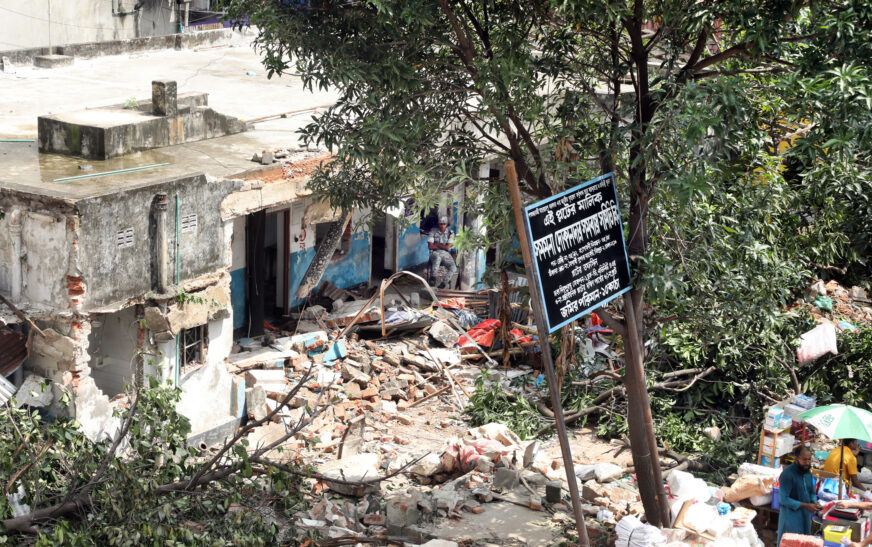
Shortly after midnight on September 25, more than 200 masked men arrived at the Radda MCH-FP Centre in Mirpur-1. By morning the equipment was gone and the structures had been pulled down with heavy machinery. A cooperative’s signboard went up on the cleared site.
What left the building was not simply anything of value. The CCTV units went, and the refrigerators, and the computers; so did the ultrasonography machines, the family planning stock, the vaccines, and the ledgers recording who had been immunised and when. That last item is the one with no replacement. A centre serving maternal and child health since 1974, overwhelmingly for families without means, cannot rebuild its patients’ histories from memory.
The most troubling detail is that police officers were present while this happened and, by official acknowledgement, did not act effectively before the valuables were removed. The officer-in-charge of Shah Ali Police Station has since been withdrawn, and Home Minister Salahuddin Ahmed has conceded negligence.
The underlying dispute is over land. Sammona Dokandar Samabaya Samiti claims an allotment from the National Housing Authority. Radda says the takeover happened without notice. Whatever the merits, the law provides a route for resolving competing claims, and it does not involve excavators at one in the morning.
This is already covered by statute. Section 141 of the Bangladesh Penal Code defines unlawful assembly to include the use of criminal force to seize property. The question is not whether the conduct was lawful but why the provision was not applied by officers standing at the scene.
The strongest argument against treating this as an isolated land dispute is that it was not isolated. Comparable incidents occurred in the same period in Mohammadpur, Adabor and at ECB Chattar. Four property seizures in Dhaka within days, each following a similar method, describes a pattern rather than a coincidence.
Reports also carry residents’ allegations that local figures coordinated the attackers, supplied weapons and arranged the excavator. If that holds up, the significant fact is organisational: crowds of 200 with heavy equipment at a fixed hour are assembled, not spontaneous.
What this amounts to is a parallel enforcement capacity, able to resolve a property claim faster than the courts and in the presence of the police. Once that capacity exists and is seen to work, it becomes the rational first option for anyone with a disputed claim and the means to hire it.
The responsibility sits with the government. What is required is not another case file but an account of how a crowd that size operated unimpeded with officers present, and action against the structures that made it possible. Dismantling them while they are still forming is considerably cheaper than doing it later.