

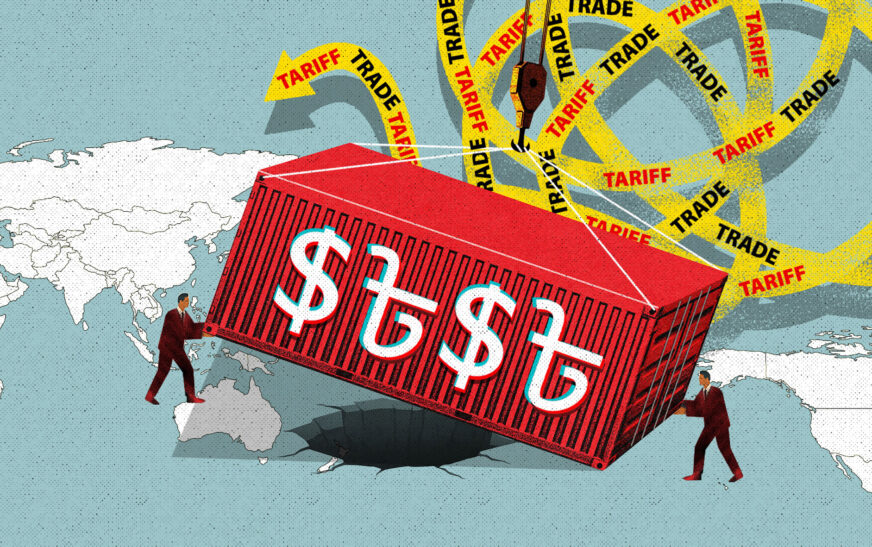
Bangladesh wants to diversify its exports, and its trade regime is arranged to discourage exactly that. The incentives facing a manufacturer still point towards the domestic market, and until that changes, diversification will remain a stated goal rather than an outcome.
The mechanism is para-tariffs. Supplementary duties and regulatory charges stacked on top of customs tariffs make selling at home more profitable than selling abroad, because protection raises domestic prices while doing nothing for export earnings. The result is an anti-export bias that falls hardest on sectors outside ready-made garments.
RMG is the exception that proves the point. Its success rests substantially on duty-free access to imported inputs through bonded warehouse facilities. A garment exporter can buy fabric and trim at world prices; a producer of plastics, leather goods or light engineering generally cannot. The privilege was never extended, and the export base stayed narrow as a result.
Why the arrangement persists is a question of political economy rather than economics. Protection creates a small number of identifiable winners who know precisely what they would lose. The losers are consumers, downstream producers and exporters, who are numerous, dispersed and unorganised. One side turns up to the consultation; the other does not.
There is also a fiscal constraint. The National Board of Revenue depends heavily on taxes collected at the border, which makes any tariff liberalisation an immediate revenue problem. That is a real obstacle, not an excuse, and it means tariff rationalisation has to be sequenced behind a credible expansion of the domestic tax base.
The timeline is no longer open-ended. Bangladesh graduates from least developed country status on November 24, 2026. EU preferences under GSP are expected to run through the end of 2029, which defines the adjustment window. Meanwhile the economic partnership agreement with Japan was signed in February 2026, and a working group on RCEP accession was approved in September.
Those agreements only pay off if domestic producers can use them. A preferential tariff into a partner market is worth little to a firm whose input costs are inflated by its own country’s duties.
Three things would make the most difference. Remove the distorting para-tariffs on imported inputs. Extend bonded and duty-free facilities beyond RMG to non-RMG exporters that can meet credible compliance standards. And invest in customs modernisation and standards infrastructure, since clearance delays and failed conformity assessments are costs no tariff schedule records.
None of this is novel, which is itself the problem. The analysis has been available for years. What has been missing is the willingness to accept a short-term revenue cost for a structural gain, and the graduation date is now setting the deadline.