

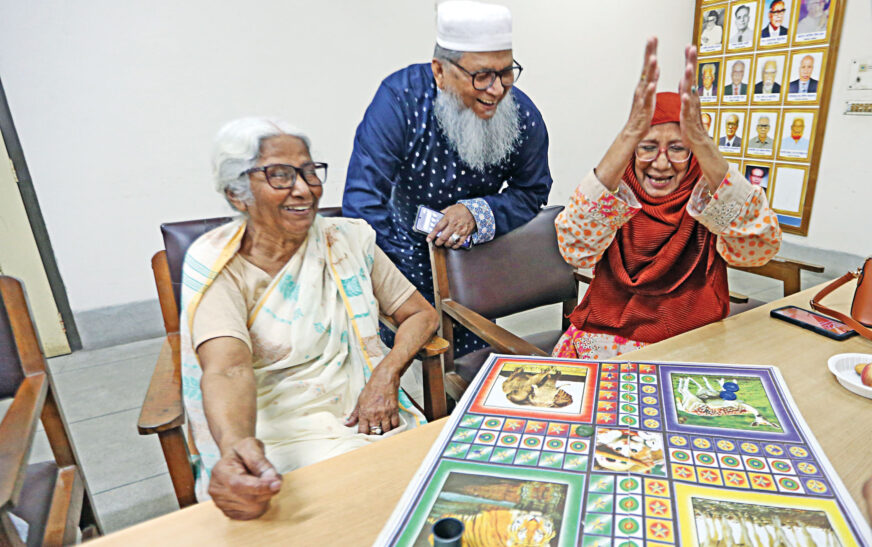
Naharul Ahmed is 72. He ran a depot for a Gazipur chemicals company for over two and a half decades, and when that job ended in 2010 there was no pension waiting at the other side of it, nor benefits of any other kind. What makes his position worth describing is how ordinary it is.
The country is ageing quickly. People aged 60 and above made up 5.9 percent of the population in 1989; by the 2022 census, with a total population of 16.98 crore, that share had climbed to 10.6 percent. Life expectancy has moved from roughly 59 years in 1990 to about 75 years in 2023. Projections put the share of people aged 65 and over at 18 percent by 2050.
The shift is global. A Global Burden of Disease study published by the University of Washington in 2021 found that at some point in the 2030s, the number of people aged 65 and above worldwide will exceed the number of children under five for the first time in recorded history.
Bangladesh’s main support instrument remains the Old Age Allowance, which reaches around 62 lakh people at Tk 700 a month. Women become eligible at 62 and men at 65. Set against the cost of medicine, transport to a clinic, or a single consultation, the figure does little to cover what ageing actually costs a household.
Family structures that once absorbed that cost are changing. Prof Aminul Haque of Dhaka University’s population sciences department notes that the joint family is giving way to nuclear households, with children moving away for education or work and leaving parents behind in the places they grew up.
The health system is further behind still. Postgraduate study in geriatric medicine arrived at Bangladesh Medical University only in the last little while, which is another way of saying that almost no practising doctor in the country was trained for the conditions that dominate later life. Prof Abu Jamil Faisel, a public health specialist, argues that a dedicated strategy is needed for non-communicable diseases alongside dementia and Alzheimer’s, which existing services are not built to handle.
Some of the groundwork has been laid on paper. The Health Sector Reform Commission, formed under the interim government last year, recommended building out geriatric services and strengthening the social safety net. SM Ziauddin Hyder, special assistant to the prime minister on health affairs, says the government is working towards an elderly-friendly health system and is weighing a plan for a comprehensive elderly village in each of the country’s 64 district towns.
Whether those proposals move from recommendation to budget line is the open question. For now, people like Naharul Ahmed are managing on savings, family goodwill and an allowance that was never designed to carry the weight now being placed on it.