


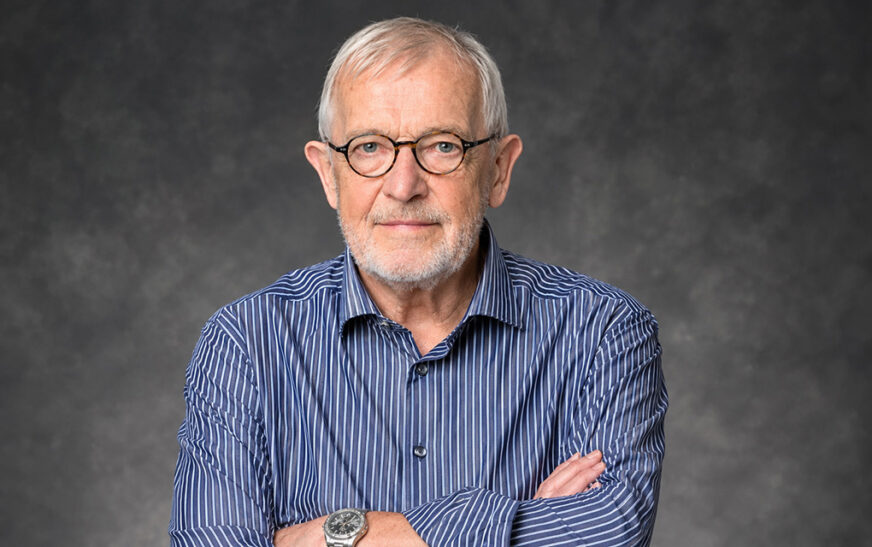
Belgian astrophysicist Francis Halzen has been awarded the 2026 Nobel Prize in Physics for his pioneering work in developing a massive observatory in Antarctica to detect high-energy cosmic particles known as neutrinos. The research has helped open what scientists describe as an entirely new field of astronomy.
The Royal Swedish Academy of Sciences praised Halzen’s scientific vision and leadership in the development of the IceCube Neutrino Observatory, built deep beneath the Antarctic ice. The facility detects neutrinos—nearly massless particles that travel across space and can carry information about distant galaxies, exploding stars and other powerful cosmic events.
Halzen, 82, received news of the award while travelling in Italy. He said he was working on a new research proposal and hoped the Nobel recognition would help secure approval for the project.
IceCube is embedded in about one cubic kilometre of Antarctic ice, extending roughly 2,500 metres below the surface near the Amundsen-Scott South Pole Station. Scientists use the observatory to study how high-energy neutrinos are produced and trace them back to extreme events, including exploding stars, gamma-ray bursts and phenomena involving black holes and neutron stars.
Halzen was previously dubbed “Neutrino Man” by Smithsonian magazine for his work, which has been credited with helping usher astronomy into a new era.